On welcoming Captain Krzysztof Baranowski to his onward voyage, finding Ubuntu in a community of businesses, and returning to South Africa with renewed purpose.
Ambassador Tokozile Xasa Director and Founder, Intombendlela Lineage–There is something quietly profound about coming home after serving your country abroad. The familiar places are still familiar, but you return with different eyes. You have seen how others organise their societies, build relationships and imagine their futures. Then you arrive home, and the questions become wonderfully personal: What have I learned? Where can I be useful? And with whom can I get to work?
South Africa has a way of making those questions impossible to ignore. We are a country of extraordinary possibilities and unfinished work. Sometimes, the distance between the two can feel daunting. But recently, two encounters reminded me that there are people steadily closing that distance—not through grand declarations, but through relationships, generosity and the willingness to show up.
One was the opportunity to deliver a welcoming address on behalf of Intombendlela Lineage at PolSA Connect. The other was attending the Amy Foundation Gala Dinner at Kevin Chaplin’s invitation.
Different gatherings. A shared lesson: there is real strength in bringing people together around a purpose larger than themselves.
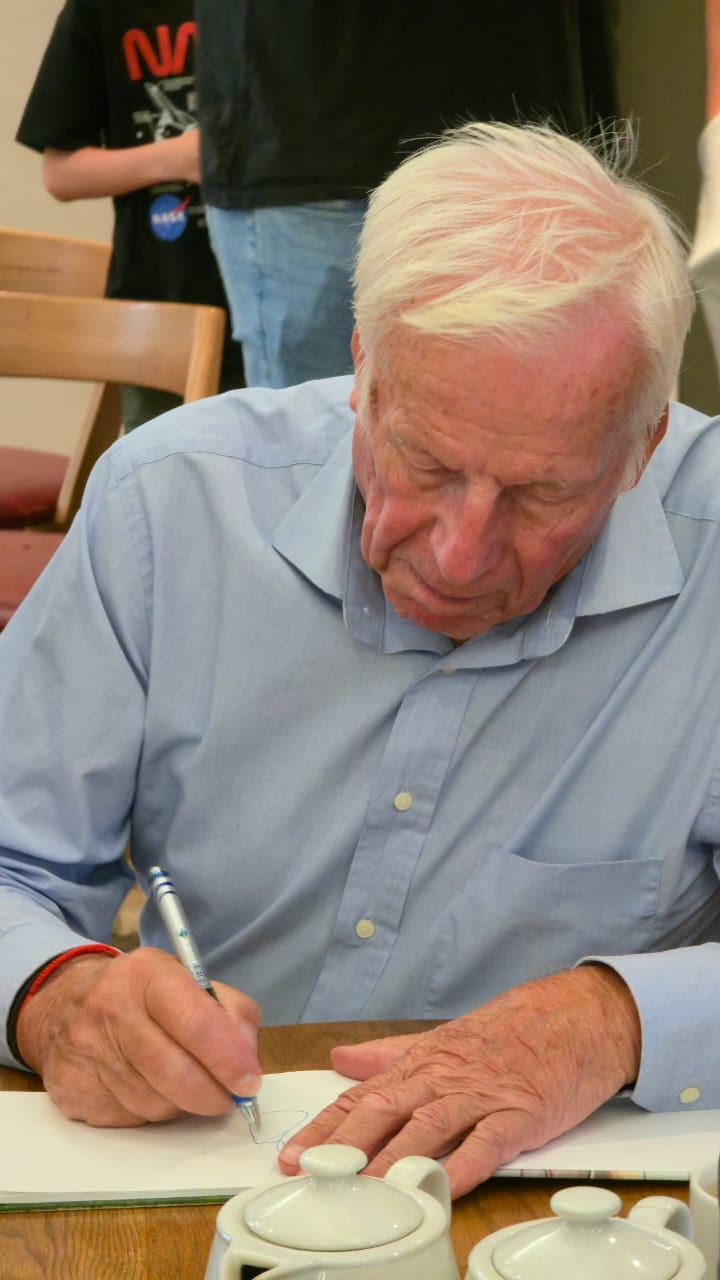
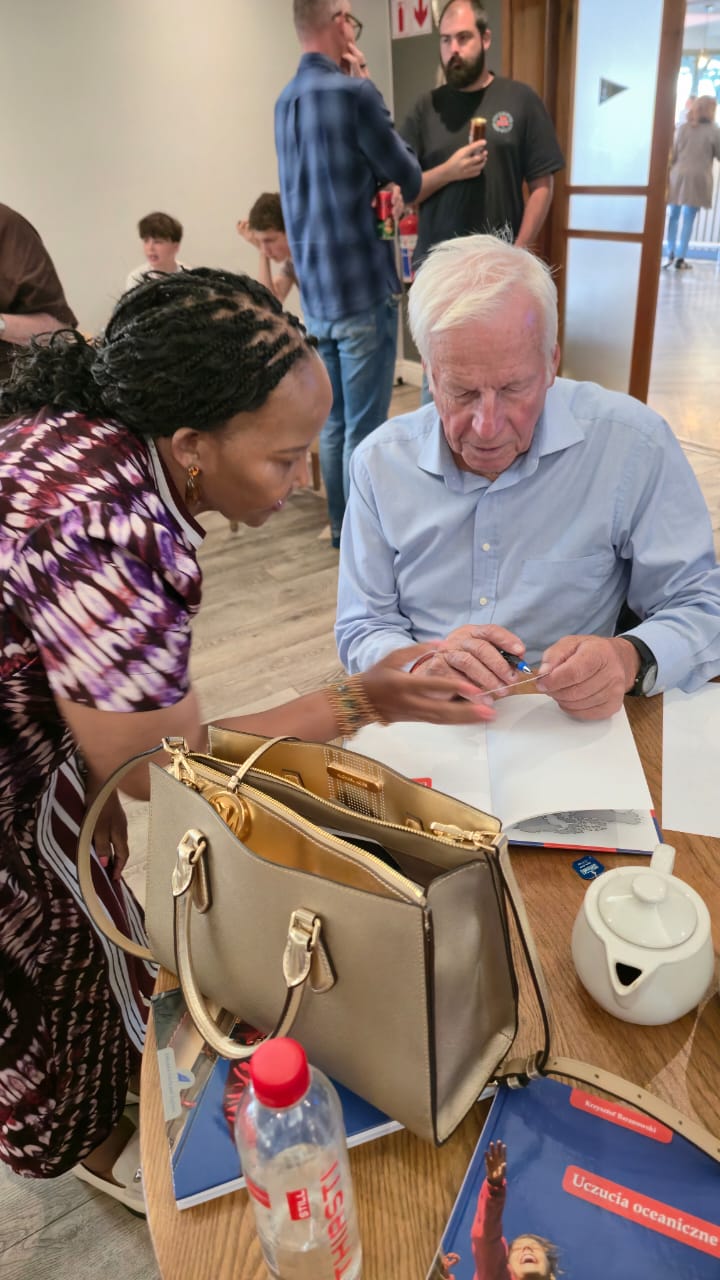
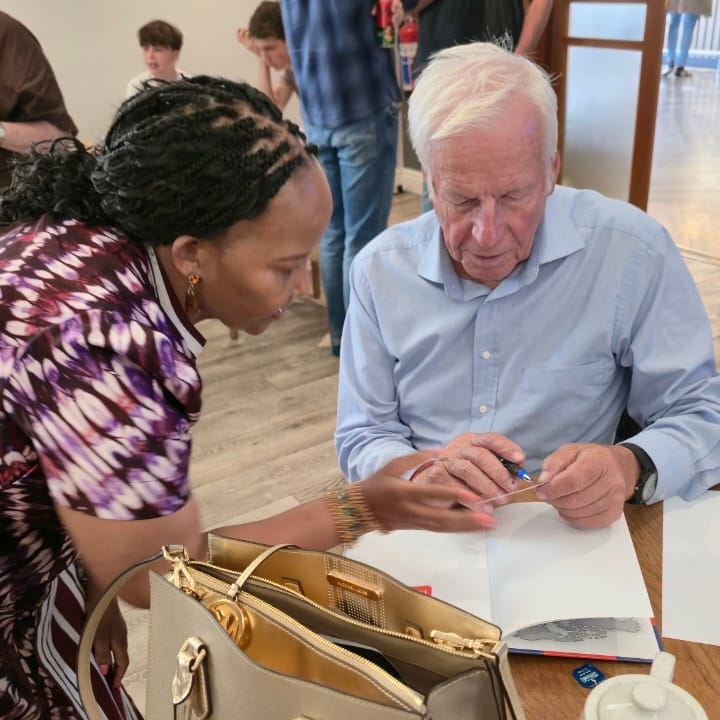
At PolSA Connect, the welcome was also an opportunity to pay tribute to Captain Krzysztof Baranowski, a Polish sailing legend who, at 88, is currently sailing solo around the world for the third time aboard Meteor. There is dignity in pausing to honour someone at such a moment. We spend so much of our lives hurrying towards the next thing that we can forget to acknowledge the people whose journeys have brought them into ours.
His background gives that journey a remarkable depth. Born in 1938 in Lwów, now Lviv, he trained as an electronics engineer and became a sailing captain, journalist and teacher. His earlier solo voyages around the world, in 1972–1973 aboard Polonez and in 1999–2000 aboard Lady B, form part of a lifetime shaped by the sea. As the founder of School Under Sail, he has also helped make sailing a place of learning for younger generations.
What moves me is not only his endurance, but the goodwill expressed in that commitment to others. He wants to continue creating opportunities for young people to learn through challenge, responsibility and experience. The message I take from his example is that age need not close the door on purpose, and that experience becomes more valuable when it helps someone else grow. Courage is not only the strength to cross an ocean; it is also the generosity to help another person discover what they are capable of.
To welcome, to thank and to wish someone well is no small gesture. It recognises that a life is more than a title, and a journey more than its destination. As Captain Baranowski moves onwards, I extend my warm wishes for the voyage ahead. May he carry with him the goodwill of those gathered to honour him, just as his example leaves us with encouragement to pursue our own extraordinary possibilities.
That occasion also held a particular meaning for me. Having returned to South Africa after my diplomatic mission abroad, I found myself in a space where enterprise, culture, diplomacy and community could meet. It was a reminder that the relationships we build across borders can continue to serve a purpose when we come home.
Diplomacy, at its best, creates the conditions in which people can understand one another and work together. That work belongs in communities as much as it does in formal institutions. PolSA Connect’s connections across the Chamber, the Embassy, business and the wider community speak to that possibility.
And yes, a room full of interesting people is a promising start. But even the finest exchange of business cards needs a second act.
The real value lies in what follows: the conversation continued, the introduction made, the opportunity opened, the commitment honoured.
My experience at the Amy Foundation brought that point home with particular warmth. I was encouraged by its commitment to helping young people realise their potential, and by the community gathered around its work. Here was a powerful expression of what happens when businesses and individuals recognise that a community’s future deserves their attention and involvement.
It offered a clear understanding of Ubuntu in practice.
We often speak of Ubuntu with affection, and rightly so. For me, it is also an invitation to consider my own responsibility. If my wellbeing is connected to yours, then I cannot be indifferent to the barriers you face. A young person’s lack of opportunity concerns all of us who hope to live in a country with a stronger, more inclusive future.
That is why community involvement matters. It brings us closer to people’s lives and helps us understand where our contribution might be useful. It reminds me that caring deeply must be followed by practical action, and that the first step is often to listen.
Good intentions matter. They find their fullest meaning when we put on our shoes and arrive, ready to listen and work.
For business, this need not mean abandoning commercial ambition. It means recognising the community within which that ambition must take root. Mentorship, skills development, enterprise exposure and access to networks can help turn potential into participation. These are practical ways to invest in people with talents and aspirations of their own.
This is deeply connected to the purpose of Intombendlela Lineage.
Intombendlela Lineage carries my mother’s name. That gives the work a personal weight: a reminder that what we build should mean something in the lives of others. We hope to help people and locally rooted enterprises move from learning to earning, and from grassroots potential to shared prosperity, with women, young people and communities at the centre.
Learning must have somewhere to lead. Talent needs a chance to be seen. An aspiring entrepreneur may need knowledge, encouragement and the introduction that makes a first opportunity possible. Progress often begins with something concrete and human.
The Amy Foundation’s work and the relationships fostered by PolSA Connect offer different points of connection to that purpose. There is room to explore collaboration carefully and practically, respecting what each organisation brings and listening to the communities we hope to serve.
I return home grateful for what I have learned, and conscious of how much there is still to learn. I hope that experience gained abroad can be useful here. The networks, perspectives and relationships built through public service can help connect spaces that too often remain separate: business and community, local leadership and international partners, people with potential and people able to open a door.
No single organisation can carry the whole task. Nor should communities have to carry it alone. But we can each take responsibility for a meaningful part of it.
For Intombendlela Lineage, the invitation is open. We would welcome the opportunity to work alongside businesses, community organisations, leaders and the international community. Our hope is to build relationships that grow into practical opportunities, with enough care and follow-through to make a difference.
These encounters have left me grateful, but also energised. They reminded me that South Africa’s story is still being shaped in places where people gather, listen and decide that another person’s future matters.
As we wish Captain Baranowski well on his onward voyage, I find myself reflecting on my own homecoming. There is much to honour, much to learn and much still to do.
I am glad to be home.