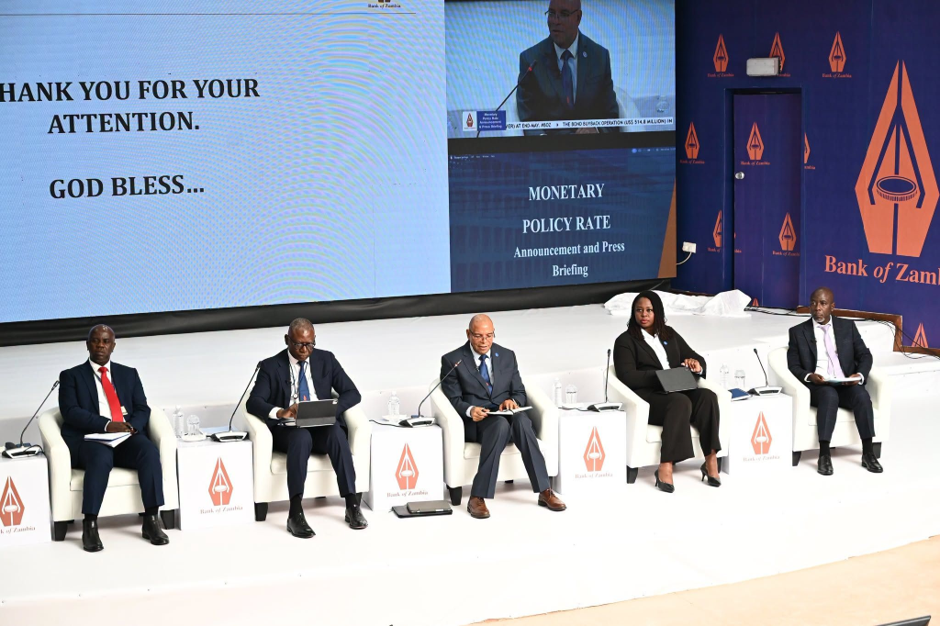
Sussana Kapepe, AfricaWorks, Agora Village, LUSAKA | 1 October 2026 - The Bank of Zambia has cut the monetary policy rate, the benchmark interest rate that guides what banks charge their borrowers, by 250 basis points, bringing it to 10.75%. Inflation has cooled to 6.1%, which means prices across the economy are climbing more slowly, and that slowdown gave the central bank room to make borrowing cheaper.
What a Lower Policy Rate Means for Borrowers and Households
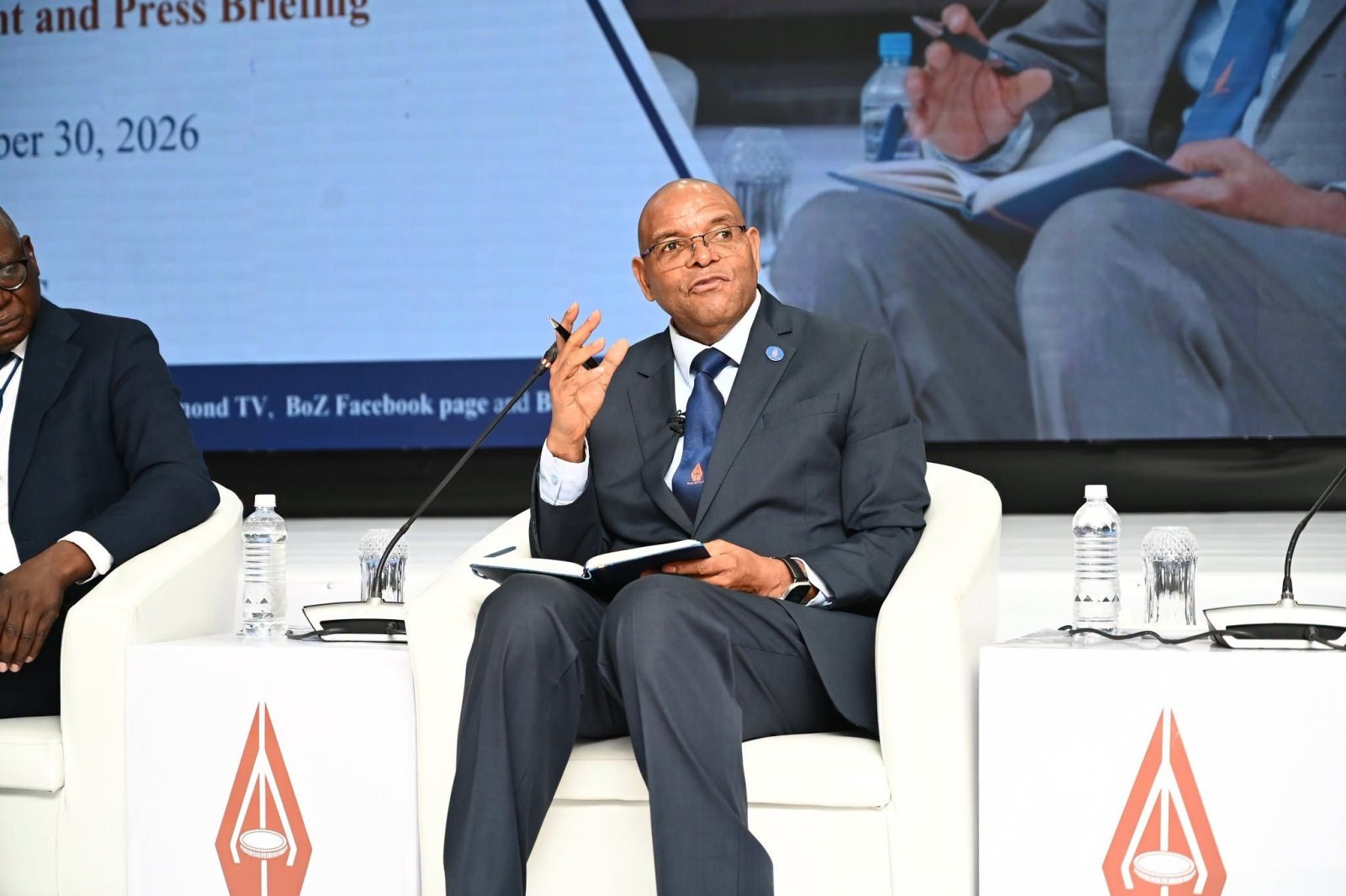
In a press briefing held at the central bank, Dr. Denny Kalyalya, Governor of the Bank of Zambia, was direct about the decision. "The Monetary Policy Committee," Dr. Kalyalya said, "decided to reduce the monetary policy rate by 250 basis points to 10.75% down from 13.25%." With inflation at 6.1%, he pointed to a growing gap between that figure and the policy rate, adding that the committee needed to match the monetary policy stance to the inflation outlook.
Households and businesses will not feel the cut directly, because the central bank lends to banks rather than to the public. In the Governor's words, "We are playing at the wholesale level," meaning banks that borrow from it now pay 10.75% instead of 13.25%, a benefit he expects them to pass on to their customers. The lending rates that banks charge ordinary borrowers have so far refused to follow government yields down, and the Governor challenged banks and businesses with a pointed question. "The central bank has moved, so what are you going to do?" he asked. For a business owner carrying a loan for stock or equipment, a response could mean lighter repayments and more cash for wages and expansion. Households with vehicle loans or mortgages stand to gain in the same way.
Appetite for borrowing was already growing. Domestic credit expanded by 14.4% in June 2026, up from 7.5% in March. Private sector credit rose 12.9% as companies refinanced existing debt and borrowed for working capital.
Falling Prices and a Stronger Kwacha Opened the Door
Central banks cut rates when they feel prices are under control. Overall year-on-year inflation slipped to 6.5% in June 2026 and down to 6.1% in September, inside the target band of 6% to 8%, the range the Bank of Zambia aims to hold so that prices stay predictable for families and businesses.
"The bumper maize harvest continues to give us positive benefits in that, maize prices, which is a major component of the basket, have continued to come down," Dr. Kalyalya said. A stronger Kwacha helped too, because imported fuel, machinery, and consumer goods cost less when the currency gains value against the US dollar. A tight monetary stance added support by holding interest rates high enough to restrain spending, and so did fiscal consolidation. "Such discipline", the Governor noted, "would complement our efforts in the monetary policy arena."
The central bank expects annual average inflation of 6.7% in 2026, 6.0% in 2027 and 6.3% in the first half of 2028, all inside the target band. Risks remain, and Dr. Kalyalya warned that even when the water is calm, there could be some waves that can knock you off unless precautions are taken. Three waves stand out. A super El Niño would lift food costs, because so intense a weather pattern can bring drought and damage harvests. Conflicts in the Middle East could unsettle global fuel and trade, while tighter global financial conditions could weaken the Kwacha.
The Kwacha gained 8.3% against the US dollar in the second quarter after a 14.8% rise in the first, then slipped 5.6% in the third quarter as of late September, leaving it 11.8% stronger since January. "This happened," Dr. Kalyalya explained, "because of continued supply by the mining sector." Net foreign exchange sales by mining companies reached $774.0 million in the second quarter, and dollar tax payments of $398.7 million lifted total mining supply to about $1.2 billion. The Bank of Zambia offered $72.0 million in liquidity support to calm swings in the exchange rate.
Reserves, Trade, and the Investor View
The central bank holds foreign currency and other assets to pay for imports and settle debts, and these gross international reserves stood at $5.8 billion at the end of June 2026, equal to 4.4 months of import cover. Two payments pulled the figure down: a $514.8 million Eurobond buyback, in which the government repurchased dollar bonds sold to foreign lenders, and $453.4 million in external debt service. Reserves recovered to $6.0 billion in July. Dr. Kalyalya attributed the recovery mainly to mining taxes.
The current account moved further into surplus in the second quarter; it records what a country earns from abroad through exports and remittances against what it pays out. "Our surplus has widened to $0.3 billion, which represents 3.2% of the Gross Domestic Product (GDP)," the Governor reported. Strong net exports and higher remittances helped. Traditional copper exports rose 3.7% to $3.1 billion, while non-traditional exports jumped 31.7% to $1.5 billion, led by nickel ores, sulphur, burley tobacco, and gemstones.
Investors face a changing return. Bids for Treasury bills exceeded the amount on offer, at an average subscription rate of 107.8%, while the government's longer-term bonds reached only 61.7%. Yields measure the return an investor earns, and they kept easing, with treasury bills at 10.8% and benchmark bonds at 15.2%. Lower yields reduce the government's borrowing bill, though savers and fund managers may earn less on new purchases.
Growth Prospects and Risks Ahead
The economy expanded by 7.2% in the second quarter of 2026, a pace the Governor described as decent. The figure is for real GDP, which counts the total value of goods and services produced after removing the effect of price changes. Information and communication technology, agriculture, construction, and mining led the way. A July survey of business opinions found output, new orders, labour demand, and capacity use above historical averages, helped by lower inflation, a steadier exchange rate and reliable power supply.
Forecasts for real GDP growth stand at 5.3% in 2026, 6.0% in 2027 and 7.1% in 2028, driven mainly by agriculture, mining, manufacturing, construction, transport, and storage. A lower monetary policy rate should help to keep that momentum alive. If prices stay inside the target band, the Kwacha holds its ground and the weather behaves, bakers, traders, manufacturers, and investors alike may find borrowing cheaper and planning easier in the months ahead.