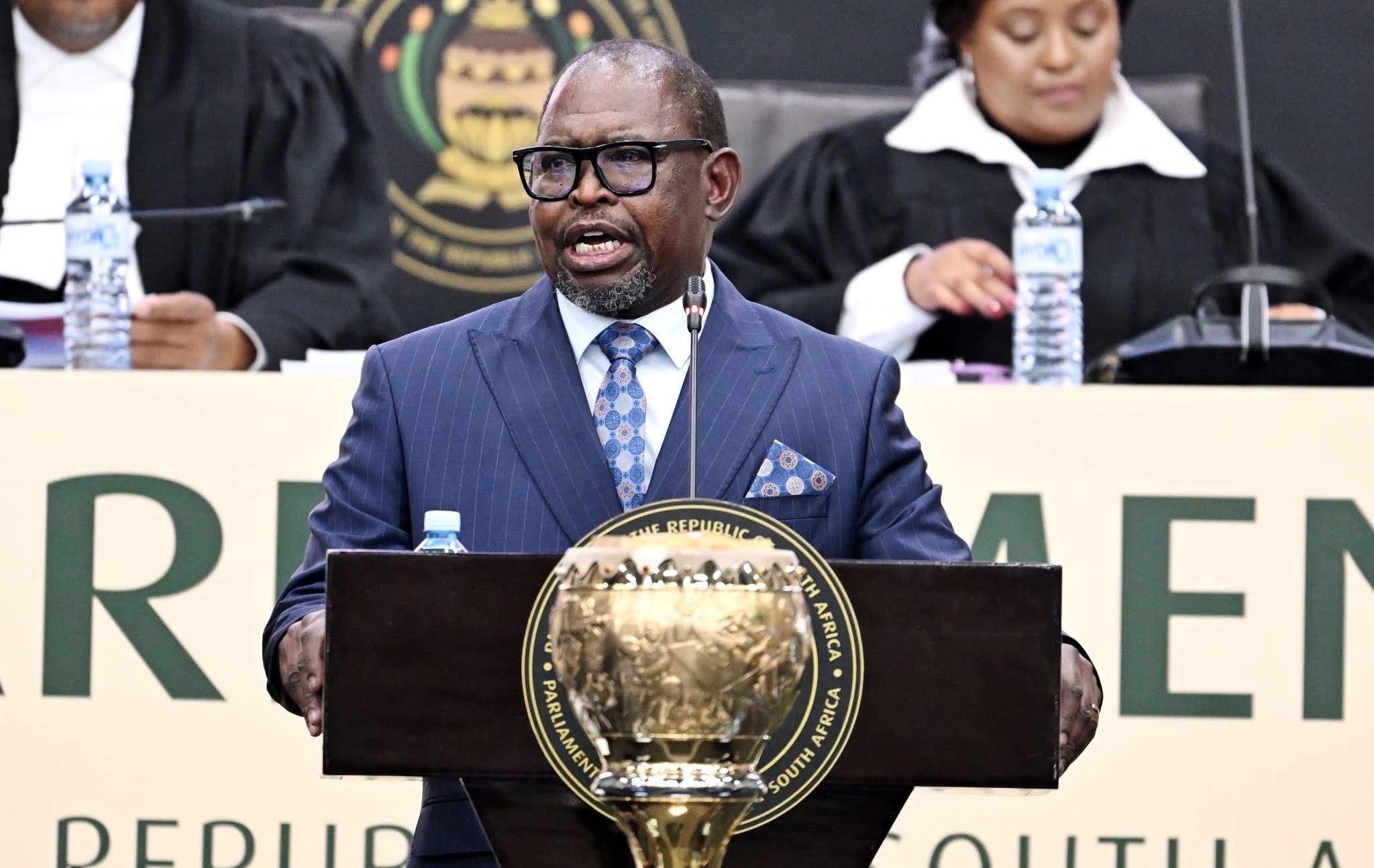
The day after the budget speech, the real work begins. Away from the parliamentary pomp, in two very different rooms, the nation’s future was being dissected not for soundbites, but for survival. In one, the hushed tones of the elite. In the other, a high-stakes public debate. Both were wrestling with a single, explosive narrative: "We have turned the corner." But what that corner represents—a finish line or a cliff edge—depends entirely on which room you were in.
THE MORNING BRIEF
The British High Commission's Closed-Door Breakfast
As dawn broke, the nation’s power brokers gathered for a closed-door session at the British High Commission. This was the ivory tower, where the air was thick with the scent of coffee and deep-water policy. Here, the conversation was about long-term structural roadmaps, the kind of talk that moves markets and shapes decades.
The Panelists:
• Kathy Nicolaou (Argent Economics, Chair)
• Khetha Dlamini (National Treasury)
• Chris Egberink (Standard Chartered)
• Songezo Zibi (SCOPA)
• Roy Haverman (BER)
The central topic was the radical new ";Fiscal Anchor"—a binding promise to stabilize the debt-to-GDP ratio. For this room, it was more than a policy; it was an economic straitjacket the government was strapping on to prove its commitment to fiscal discipline. It’s a signal investors like Chris Egberink have been desperate for, and a tool of accountability for watchdogs like Songezo Zibi. The question wasn't *if* it was necessary, but if a state plagued by inefficiency could possibly adhere to such rigid rules. This was a game of chess, with the country's credibility as the prize.
THE LATE-NIGHT UNPACKING
CNBC's Live Broadcast with BDO
Hours later, under the glare of television studio lights, the debate went public. Hosted by BDO and moderated by Godfrey on CNBC, this was the main event, bringing the budget to the 'man on the street' and anxious investors. The tone shifted from theoretical to visceral. This was no longer chess; it was a high-speed sprint.
The Panelists:
• David Masondo (Deputy Finance Minister)
• Edward Kieswetter (SARS Commissioner)
• Busi Mavuso (Business Leadership SA)
• Zintle (Consumer Goods Council)
Deputy Minister David Masondo, a runner, framed "turning the corner" as a pivotal moment in a race. But is it a final sprint for the finish line, or a dangerous breather before the next grueling hill? His optimism was met with a cold dose of reality from Busi Mavuso. She issued a stark warning: key "reforms are under threat." Transnet remains a logistical nightmare, and Eskom is getting "too comfortable." Her message was a brutal counterpoint: the country must function regardless of who is in power.
"This is the fault line: while Treasury celebrates a cyclical upswing, business leaders see a structural crisis that remains fundamentally unresolved."
THE WEAPON
SARS: From Cost Centre to AI-Powered Investment
If South Africa is to win this race, it needs a powerful engine. That engine, according to SARS Commissioner Edward Kieswetter, is being forged in the fires of transformation. The narrative is shifting dramatically: SARS is no longer a mere cost centre, but a strategic "investment centre" with the potential to close the gaping tax gap.
The vision is clear: a SARS of the future, armed with AI, laser-focused, and staffed with elite forensic skills to wage war on criminal tax evasion and sophisticated wealth structures. This requires deep institutional investment to attract and retain talent far beyond that of a typical auditor. A future-proof SARS, Kieswetter argues, is the state's sharpest weapon in the fight for fiscal credibility.
THE VERDICT
A Death Sprint, Not a Victory Lap
So, have we turned the corner? Yes, but this is no moment for a breather. It is the beginning of a death sprint. The morning's talk of fiscal anchors and the evening's clash of optimism and realism reveal a nation at a tipping point. The re-tooling of SARS is a desperate, necessary move in a high-stakes gamble for economic survival.
Masondo's optimism is the adrenaline of the sprinter. Mavuso's warnings are the burning in the lungs, a reminder of the immense effort still required. The road ahead is not a victory lap. It is a brutal, unforgiving straight where South Africa will either collapse from exhaustion or break through into a new era. The corner has been turned, but the race for our future has only just begun.