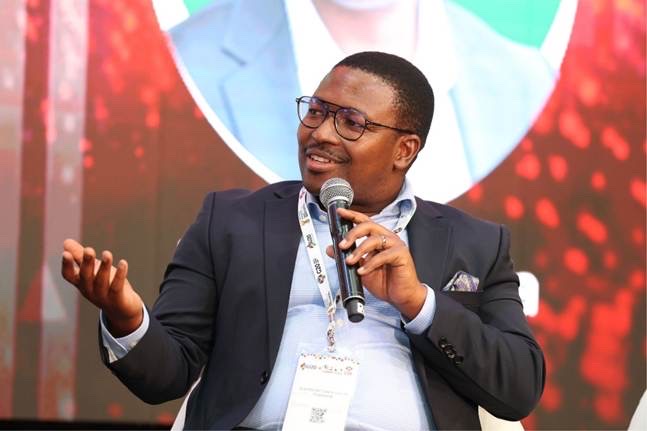
They are far from perfect, but South Africa’s transformation laws have changed thousands of lives for the better. An oft-overlooked part of this encouraging story is enterprise development, writes Telkom head of business development Tshepo Phetla.
South Africa’s decades-long black-empowerment drive has drawn criticism from several quarters lately. There are valid reasons for this. But Broad-Based Black Economic Empowerment (B-BBEE) has seen thousands of success stories. We dare not abandon our quest for true human equity on a whim, when we have come so far, and we have had so many encouraging victories.
We need to take a close look at where empowerment is working effectively. B-BBEE has been criticised by South Africans for not going far enough, for not yet delivering on its promise. It’s true that, for all its progress, millions of citizens have yet to feel the benefits of B-BBEE. Another accusation sometimes levelled at black empowerment is that we do not yet have a black-owned, grassroots start-up that came up through the enterprise-development ecosystem. “Where are the self-made billionaires,” these critics ask. “Where are the leaders who have built their businesses from the ground up, as part of the B-BBEE ecosystem?” To these critiques, I say look around. Major beneficiaries of B-BBEE are all around you. They might not be billionaires, but they are successful businesspeople, working professionals, earning respectable salaries, and running small and medium-sized businesses. A medium-sized business might not hog the headlines, but it can employ a workforce of several dozen, and have a turnover running into the tens of millions. These are black people whose lives have been improved by the state empowerment programme. Today they earn enough to raise families, buy homes and send their children to good schools. That is success.
Imbalance remains
Another frustration is that many South Africans feel excluded from empowerment opportunities. They have not been afforded training, they have not been brought into the corporate fold as interns, helped to start businesses, or grown into business suppliers. There is a measure of despondency, which must be acknowledged. The fact is that our country still faces massive inequality. According to the IMF, in South Africa, the top 20 percent of the population holds more than 68 percent of income, while the bottom 40 percent holds 7 percent of income. There are initiatives to correct this imbalance, but much more remains to be done. The private sector is running enterprise and supplier-development programmes at scale, working to achieve organic change, to help black start-ups grow their dreams into viable businesses.
SME-driven transformation
There is worldwide consensus about the importance of SME development to help grow economies. A World Bank report has identified young entrepreneurs as South Africa’s best hope of solving the jobs crisis. One of South Africa’s strengths is that we have been able to align our transformation programmes with small-business development. This is given explicit expression through the B-BBEE codes. Without it, business development would have been left to the discretion of the private sector, and might not have reached the scale it currently enjoys[SP1] . There have been encouraging successes. A business like telecommunications-services provider Gcwensa Telecomspartnered with the Telkom Futuremakers development programme and was able to achieve transformative growth. Gcwensa required support to cover the infrastructure costs of awarded projects. Telkom approved a R7-million loan through the ABSA Supplier Development Fund in 2023. From a base of R42-million in FY2023, the business turned over R62-million in FY2024. Of that, R12.5-million was generated through Telkom. The business created 86 permanent jobs – mostly among black youth. Likewise Multiplek, a 100% black female-owned information, communication and technology enterprise, grew from four technicians to employing 94 staff – 60 of them young people – and generating a turnover of R22-million. At Telkom, we have been privileged to see businesses like retail group Mafoko Global, training provider NetCampus and staff-transport business Lula Loop on a similar journey[SP2] – achieving enterprise growth that has material, life-changing benefits for South African people.
Effective entrepreneurship: Thinking big
There are development enterprises that have fundamentally transcended the SME category. These are South African B-BBEE success stories – not creating billionaires, but generating income, and changing the lives of young black people at scale. There is certainly room for more success stories. If I were to advise South African tech start-ups on how to achieve greater, more transformative scale, I would encourage them to think beyond local markets. The recent G20 gathering emphasised that South Africa is part of an international community. We must think that way and build partnerships that transcend our immediate environment. By thinking big, we can grow big! This applies to business and to our nation. Our development trajectory is a process. Through B-BBEE, through empowerment, through business development, we are improving lives. We have seen successes – not enough, but a lot. We must stay the course, and continue empowering our people. It is no easy walk, but we are well and truly on the path.