Jeannette Ilunga, Mulungushi Conference Centre, Lusaka, 11 September 2025 — Consider the moment when a banker looks at a power plant proposal and thinks "impossible" before their technical team proves them wrong in real time. Or when a three-month financing deal materialises where two years would normally be optimistic. These were not hypothetical scenarios discussed at the Energy Forum for Africa Conference; they were actual case studies shared by institutions that have cracked the code on African energy financing.
The panel discussion that unfolded revealed something rarely seen in development finance circles: concrete examples of deals that worked, specific dollar amounts that moved, and frank admissions about what actually convinced commercial lenders to write cheques for African power projects. Financial institutions, development banks, and private sector players were not talking about potential anymore; they were dissecting successful transactions and explaining how they pulled them off.
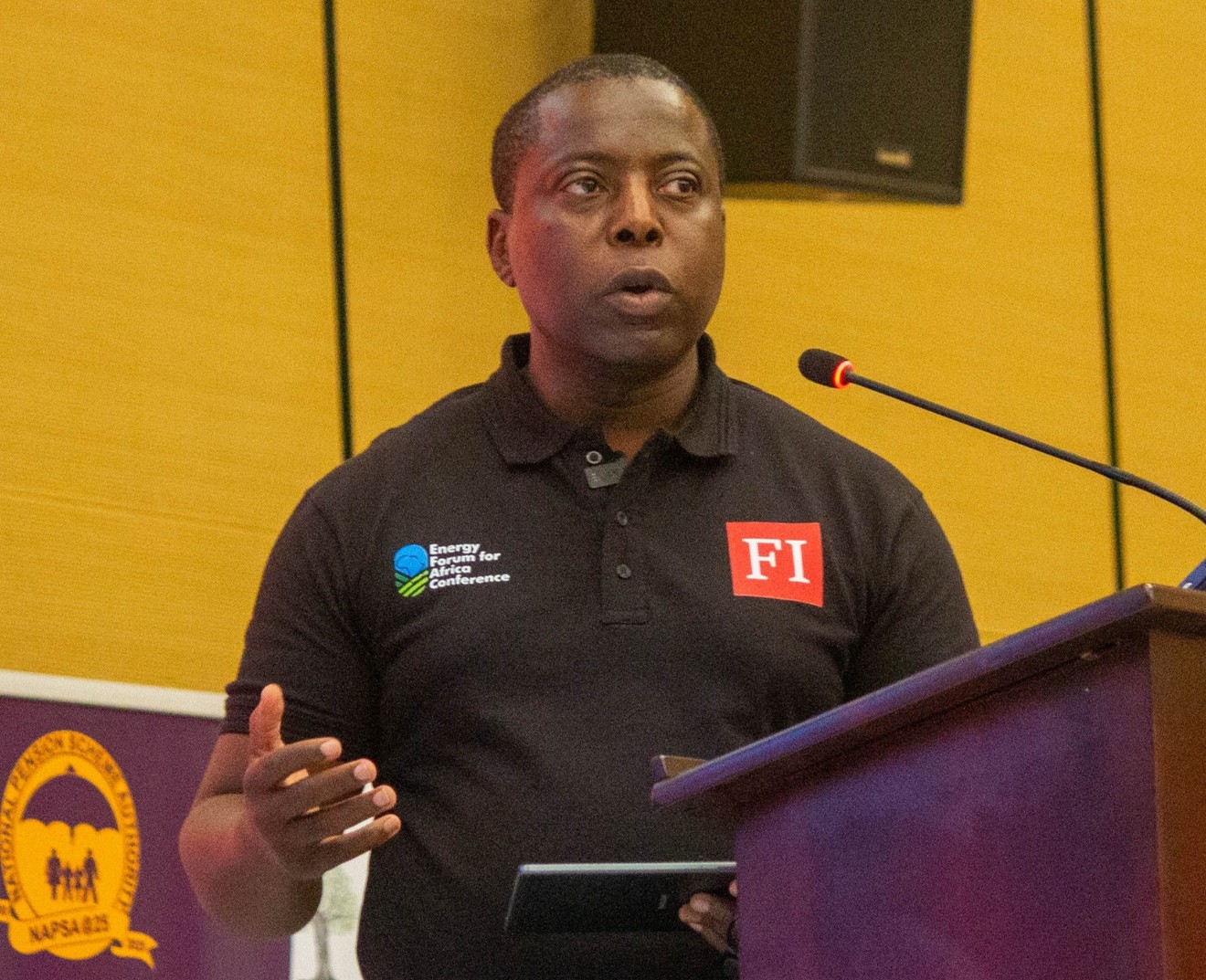
Whether this was planned or happened coincidentally, the timing feels deliberate. After Botswana and Zambia announced their breakthrough energy cooperation agreement, industry leaders gathered to break down exactly how private capital can flow into projects that have long struggled to attract serious investment. The panel, moderated by Mr. Mwelwa Chibesakunda, Founder of Financial Insight and featuring representatives from major financial institutions across the continent, offered rare insight into the mechanics of energy financing in a region where power shortages have become an unfortunate constant.
When Banks Move at Emergency Speed
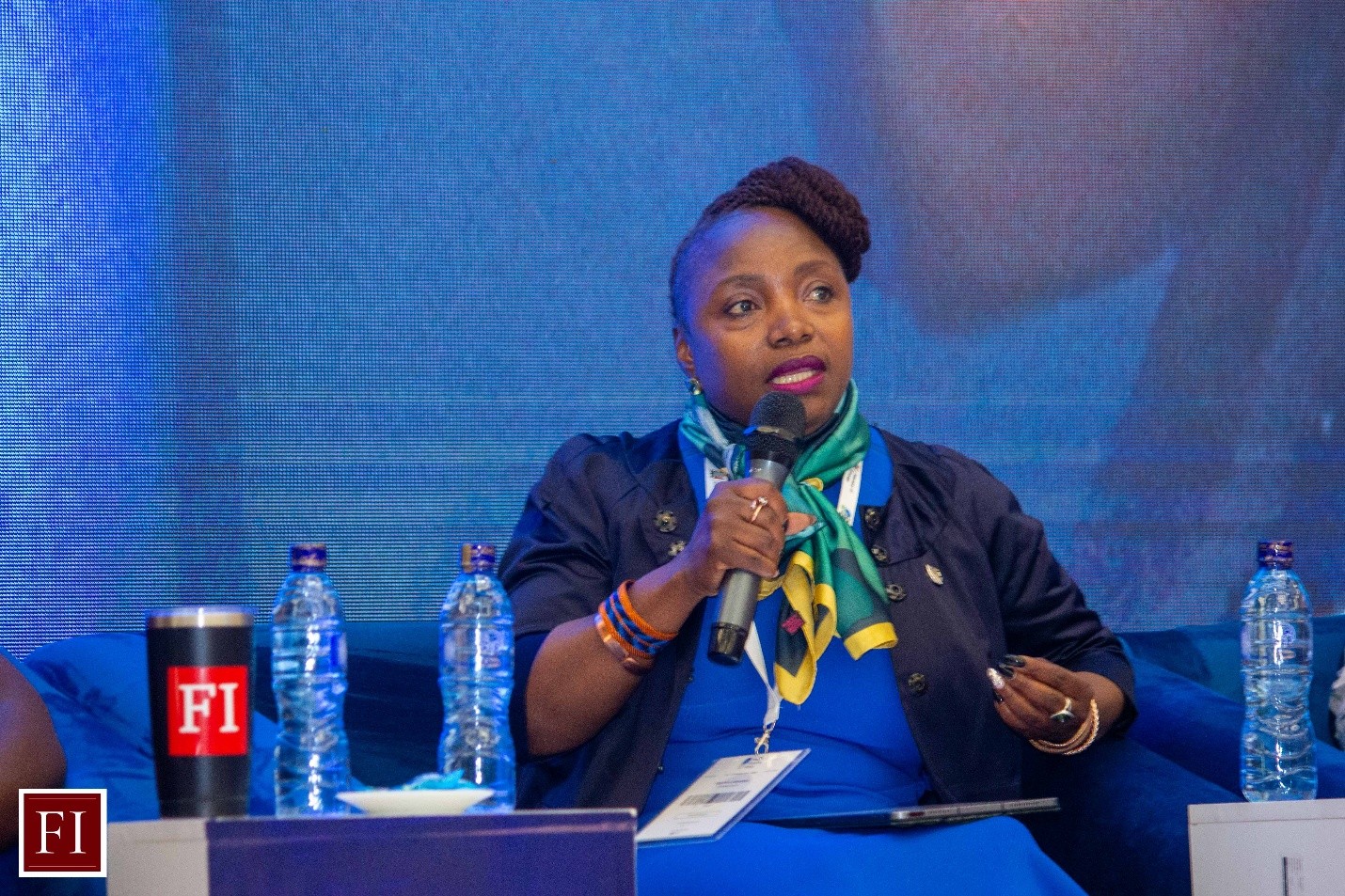
Ms. Helen Lubamba from Stanbic Bank Zambia delivered perhaps the most telling anecdote of the session. When Zambia faced its recent power crisis, her team closed an emergency power financing deal in three and a half months; a timeframe that would make most development finance professionals dizzy with disbelief.
"I must admit when I first heard the solution, I thought there is no way our bank is going to do this," Ms. Lubamba recalled, describing how her technical team convinced her that trading power through the Southern African power pool could actually guarantee loan repayments even when the national utility's balance sheet looked shaky.
The deal involved Green Co acting as an intermediary, essentially banking and unbanking payments through electrons that ZESCO would produce in the future. This kind of financial engineering represents a departure from traditional project finance, where cash flows typically come directly from power sales to a single off-taker; a radical approach that definitely yielded results.
Ms. Lubamba's team also structured a $71 million facility for the Kariba North Bank extension by securing First Quantum Minerals as the primary off-taker. This approach capitalised on the fact that mining companies, with their massive power appetites and foreign currency earnings, have become the bankable clients that make energy projects viable where national utilities cannot provide the same level of comfort.
Development Finance Institutions as Market Makers
The African Development Bank's Mr. Farai Kanonda, who arrived fashionably late to join the discussion, outlined his institution's role as more than just a lender. In transactions worth $4 billion, AFDB might contribute only $50 million, but their presence signals to other investors and lenders that someone with deep country knowledge has done the due diligence. What this means is that their involvement carries credibility, they bank on their reputation to attract bigger investments.
"It provides comfort to other players," Mr. Kanonda explained, describing how development banks serve as a bridge between government policy intentions and private sector execution. AFDB helps negotiate the inter-governmental agreements and inter-utility memoranda that form the legal foundation for cross-border energy projects.
The bank has been particularly active in supporting the Southern African Power Pool's expansion, providing technical assistance for grid code harmonisation and helping governments understand the economic benefits of treating electricity as a regional commodity rather than a national resource.
Private Sector Participation Reaches Critical Mass
The International Finance Corporation's Ms. Madalo Minofu brought news of the institution's 2030 strategy to the panel discussion. Their strategy places energy infrastructure at the centre of their African operations. When Mr. Mwelwa posed a question about the innovative financial instruments and collaboration with local institutions that IFC was undertaking, Ms. Minofu highlighted a key example.
"IFC's scaling solar programme, first piloted in Zambia, has become a template for how blended finance can make utility-scale renewable projects bankable," she explained.
More intriguingly, IFC has since launched two major programmes targeting distributed energy and mini-grids. These sectors have historically struggled to attract commercial financing due to their fragmented nature and regulatory complexity. The Cross Boundary programme, with $495 million in committed capital, and the Zafiri investment vehicle represent serious attempts to industrialise what has traditionally been a development aid approach to rural electrification.
Mrs. Muluwa Mpundu Chola, the general manager and head of legal from Petrodex Zambia, deepened this discussion by bringing in the perspective of energy traders, who see opportunity in Zambia's dangerous over-reliance on hydroelectric power.
When the moderator asked, "What market conditions are required for expanding energy trading and grid stability?" She confidently identified three key conditions: regulatory clarity, contractual bankability, and developed infrastructure, a clear response that answered the question concisely.
Ms. Chola also explained that more than 85% of the country's electricity is dependent on water sources. What power traders can do to tackle this is provide stability by importing electricity during drought periods and exporting surplus during good rainfall years. For this to happen, however, cross-border and domestic investment is not only key, it is encouraged.
Zambia Positioned as Regional Energy Hub
When asked about policy changes that would enhance private sector participation and how regional integration could accelerate investment in Zambia's energy projects, Altaz Kasam of Axion Energy delivered a compelling assessment. The African renewable energy independent power producer, headquartered in Madagascar, brings continental perspective to Zambia's investment scene.
"From a policy perspective, I believe Zambia is in a prime position today because it ticks the key enablers for private participation," Mr. Kasam explained, outlining four critical pillars that drive investment decisions across Africa.
The first pillar centres on regulatory clarity. Zambia provides "a clear roadmap to develop projects and obtain the relevant permits," addressing investor concerns about bureaucratic uncertainty. The second involves bankable offtake arrangements, with Mr. Kasam noting Zambia offers "strong creditworthy off-takers that provide relevant guarantees" crucial for revenue security in power projects.
Macroeconomic stability forms the third pillar, particularly around foreign exchange. Mr. Kasam highlighted the "clarity on foreign exchange" policies, echoing President Hichilema's emphasis on Zambia's lack of exchange control restrictions. This removes significant barriers for international investors seeking repatriation assurance.