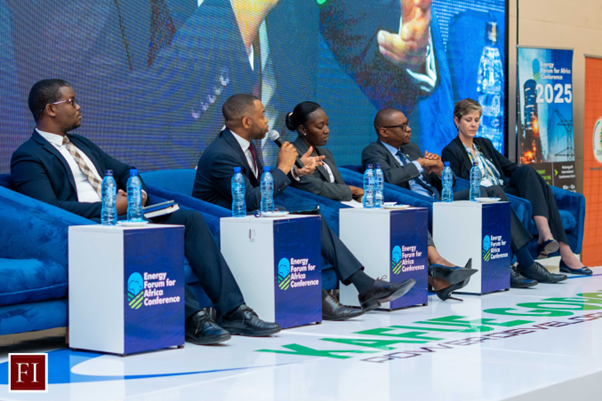
Clarence K. Chongo, Mulungushi International Conference Centre, Lusaka, 11 September 2025 — Picture the scenario: A mining operation in Zambia desperately needs power to expand, while just across the border in the Democratic Republic of Congo, a hydroelectric plant generates surplus electricity that could power entire cities. Between them lies a few hundred kilometres and a web of bureaucratic nightmares so tangled that the surplus power never reaches the deficit, the mine can't expand, and investors with billions of dollars watch from afar, unwilling to wade through the regulatory maze.
The scenario plays out daily across Africa's energy markets, where some of the world's most abundant renewable resources remain stranded while communities and industries face rolling blackouts. At a recent high-level panel discussion on financing Africa's energy future, industry leaders laid bare an uncomfortable truth: the continent's energy crisis stems from a system so fundamentally broken that even when solutions exist, they can't get built fast enough to matter.
The problem goes far beyond lack of resources or capital. Africa sits atop vast renewable energy potential, and international investors hold billions ready to deploy. Yet between the abundance and the need stands a maze of mismatched regulations, currency risks, transmission constraints, and permitting processes that can stretch projects across multiple years while demand continues to outpace supply.
The Trading Trap That Strangles Energy Flow
Energy trading across African borders remains a cruel joke for many regions. Wezi Gondwe, Managing Director of GreenCo Power Services, described how intermediaries attempt to bridge the gap between surplus and deficit areas. "Traders like GreenCo are investors in the market value chain, taking on certain risks," he explained, outlining how they connect different parts of the energy system while absorbing some of the uncertainty that paralyzes direct deals.
GreenCo performs what Gondwe calls "tenor transformation"—matching the long-term financing needs of power producers with the shorter-term commitments of industrial consumers. The company tries to make markets work by pooling generation and managing risks that individual players cannot handle alone.
While West Africa has made strides through coordinated regional planning and the ECOWAS Regional Electricity Regulatory Agency, which creates binding regulations across member states, Southern Africa tells a different story. Here, transmission constraints choke the movement of power between countries that desperately need each other's resources.
The success of West Africa's CLSG transmission line, connecting Cote d'Ivoire, Liberia, Sierra Leone, and Guinea through blended financing from multiple development banks, offers a blueprint that remains largely uncopied elsewhere. The line operates through Transco CLSG, a company owned by the four connected utilities, sustaining itself through wheeling revenues. But replicating this model requires the kind of regional coordination that has proven elusive in other parts of the continent.
When Billions Sit Idle While Lights Go Out
The financial firepower exists to solve Africa's energy problems, yet systemic barriers keep capital on the sidelines. Rentia Van Toda from Standard Bank South Africa painted a picture of frustrated abundance during the panel discussion. "Standard Bank has financed 12 gigawatts of power over the last 10-12 years, mostly through IPPs, with 2 GW outside South Africa," she said, describing a bank ready to deploy billions more if the conditions were right.
But those conditions remain elusive across much of the continent. Van Toda emphasized that her bank looks for "markets with policy certainty, opportunities to scale up, openness to the private sector, and willingness to partner with financiers." An open market access framework, she added, acts like a green light for major financial institutions.
Local banks face their own shackles. Mwindwa Siakalima, the Chief Executive of Stanbic Bank Zambia, outlined the crushing constraints that keep local financial institutions from funding renewable projects at scale. Among the biggest obstacles, he noted, are "single obligor limits" that restrict how much banks can lend to any single entity. For the kind of large-scale projects Africa needs, these limits create insurmountable barriers.
Developers struggle to secure seed capital for feasibility studies, the foundation for any serious project. Power Purchase Agreements frequently lack the legal and commercial robustness that lenders demand. Currency hedging across multiple borders adds layers of cost and complexity that can kill projects before they start.
The Permitting Purgatory That Crushes Dreams
Perhaps nowhere does the system's dysfunction show more clearly than in permitting and licensing. What should take months stretches into years as developers ping-pong between multiple regulatory bodies with conflicting requirements. Nsopwa Sikanika from Kanona Power Company laid out the reality facing developers attempting cross-border projects.
"Developers require assurance on regional and national regulations to secure investments," Sikanika explained, describing regulatory certainty as the foundation for any serious energy development. But certainty remains scarce when each country maintains different requirements, timelines, and fee structures.
Sikanika outlined other critical needs: payment security through mechanisms like escrowed collections and letters of credit, hard currency settlement options to avoid hedging against multiple currencies and streamlined permitting processes. "Efficient permitting and licensing," he said, requires "streamlining and harmonizing permitting and licensing processes across countries" to encourage the transmission investments the region desperately needs.
Tax policies add another layer of confusion. While some countries offer tax relief for renewable energy equipment, similar incentives rarely extend to transmission infrastructure, despite its critical role in moving power from generation to demand centres. The absence of exchange controls—allowing easy movement of capital—remains spotty across the continent, adding political risk to already complex financial structures.
Success Stories Amid the Chaos
Despite the obstacles, some projects push through the bureaucratic maze. The Kariba North Bank Extension Power Corporation recently brought online a 100 MW solar plant, now the largest in Southern Africa outside South Africa. Kenneth Chomba from KNBE announced during the panel that their plant "reached financial close in May, was connected to the grid on May 15th, and officially commissioned on June 30th."
Copperbelt Energy Company has commissioned 60 MW of solar capacity and achieved financial close on an additional 136 MW project. Vincent Nyurenda from CEC confirmed the progress: "achieving financial close for a 136 MW solar plant (Itimpi Part 2), currently under construction with COD expected in Q1 2026."
These successes share common elements: patient capital, strong local partnerships, and regulatory environments that, while imperfect, provide enough certainty for investors to move forward. Zambia's implementation of open access policies and net metering has created space for private sector participation that other countries lack.
The Get Fit Program, supported by 41 million euros from the German government, aims to bring 120 MW of solar capacity online through private developers. Yet even this relatively modest program faces delays from the complexity of project finance, where lenders providing 70-80% of capital rely entirely on project cash flows for repayment.
The Cost of Continued Dysfunction
The human cost of energy market dysfunction extends far beyond inconvenience. Mining operations that could drive economic growth sit idle. Manufacturing that could create jobs never starts. Communities continue to rely on expensive, polluting alternatives when clean power sits unused just across their borders.
Lenga Wadja from Copper Belt Energy Company captured the operational reality facing energy companies across the region. "CEC's core value is customer-centricity, ensuring customers, particularly those in mining, are fully supported despite power deficits," he said, describing how companies struggle to serve clients while wrestling with transmission constraints and dwindling energy resources.
The irony cuts deep: Africa holds some of the world's best renewable energy resources, yet energy poverty persists across the continent. Solar potential in the Sahara could power Europe, while hydroelectric resources in Central Africa could light up entire regions. Wind resources along coastlines remain untapped while diesel generators burn imported fuel to keep basic services running.
Market liberalization offers hope, but only when paired with coordinated regional planning and standardized regulatory frameworks. The Southern African Power Pool exists on paper, but without the transmission infrastructure and regulatory harmony to function effectively. East Africa faces similar challenges despite abundant geothermal and hydroelectric resources.
The path forward requires acknowledging that energy infrastructure crosses borders, but regulation remains stubbornly national. Until African governments can create the kind of regional coordination that has worked in West Africa, billions in investment will continue to sit on the sidelines while communities remain in the dark. The question remains whether political will can catch up to economic necessity before another generation passes without power.