Jeannette Ilunga, Ciêla Resort & Spa, LUSAKA| 18 October 2025 — Remember being seven years old and needing a parent's signature on a permission slip for every school trip? Museums, zoos, science centres—you could not go anywhere without that signed piece of paper declaring someone else approved your travel. It made sense then. You were seven.
African aviation has been operating like that seven-year-old for years. Writing letters. Waiting for signatures. Asking permission to do what needs doing. Except Africa is not seven anymore, and Captain Derrick was standing in front of a room full of aviation professionals to say exactly that.
Standing as Director General of Zambia Civil Aviation Authority, he had spent eighteen months doing what his peers talked about in conference halls. Negotiating fifth freedom routes, reducing airspace conflicts to nearly zero and pushing Air Service Agreement reviews through bureaucratic machinery that usually moved at glacial pace. Somewhere along the way, between diplomatic niceties and carefully worded statements, he ran out of patience with the permission slip approach.
African aviation was still waiting, still corresponding, still explaining why progress would take more time, more funding and more consensus. Captain Derrick was done waiting.
"We should not wait for anybody to do any work for us. We should be able to do the work for ourselves," he said sternly.
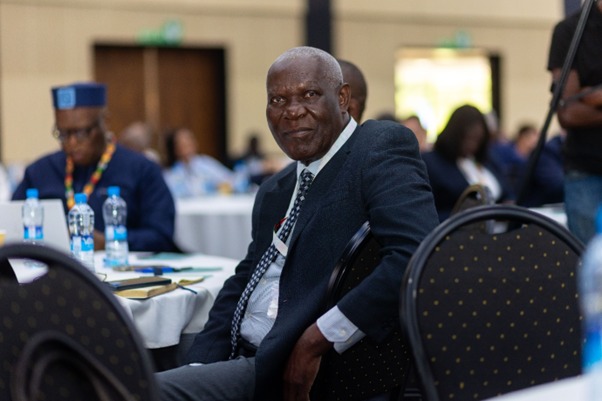
Several attendees shifted in their seats because the statement was controversial and someone had finally said it out loud.
Training Cannot Wait for the Test
When International Civil Aviation Organisation (ICAO) auditors arrived in Zambia last year, they found what Captain Derrick already knew existed. Years of underfunding had carved gaps into the authority's expert training programs for aviation inspectors. International standards exposed weaknesses that everyone had been quietly aware of but nobody had addressed with urgency.
After informing the government about the upcoming audit and the vulnerabilities it would reveal, funding materialised. Training programs launched and inspectors updated their certifications but Captain Derrick extracted a lesson that surpassed preparing for an exam.
"What it also showed to us was that training is not something you should only be doing because you have an audit. Training must be a continuous process," he told the conference. His philosophy now demands permanent readiness, with regulators operating as if auditors might arrive tomorrow morning unannounced.
His challenge to his team went deeper than technical competence. Sixty-one years after independence, why should failures persist? Why should Zambians accept being perceived as incompetent or failing? Leadership must commit to excellence with uncompromising standards of integrity, morality, and technical expertise
Sometimes commitment means taking action rather than waiting for responses to correspondence. Captain Derrick recalled resolving a specific issue with Zambia Airways last year, acting instead of waiting for the usual rounds of letters and replies. "I think sometimes we have to take actions in order to move forward." He reiterated
While other countries held meetings about SAATM (Single African Air Transport Market), Zambia turned policy documents into actual flight paths. Fifth freedom routes with Zimbabwe, Botswana, Tanzania, and Congo DRC moved from theoretical frameworks to operational reality. Air Service Agreements got rewritten with firm deadlines attached. One review was scheduled to conclude by November's end. Discussions with Congo DRC would finish even sooner.
Working together with neighbouring countries paid off — problems that used to happen when aircraft moved from one country’s airspace to another almost completely disappeared. Close cooperation with Congo DRC and Tanzania eliminated coordination failures that had plagued regional flights for years.
Airlines Choose Familiar Chains Over Open Skies
An airport representative delivered an uncomfortable truth during the question session. Roughly 38 countries have signed onto SAATM. Implementation remains patchy not because airports or regulators failed to do their part, but because airlines resist change.
"But if you look at the implementation side of it, we still see airlines resisting this, still wanting to protect their local airlines," the commentator stated. Carriers cling to protectionist models that have kept African aviation small and expensive, even as regulators dismantle barriers to competition.
Captain Derrick had already addressed this tension, he said, "Once it becomes affordable, we will see a lot more African tourists traveling intra African tourism." His calculation is straightforward but requires airlines to believe in abundance rather than scarcity. Lower fares driven by competition could create markets large enough for everyone to profit, but getting carriers to abandon decades of operating behind protective barriers requires a leap of faith most are not ready to make.
Supporting infrastructure must evolve alongside aviation policy, he noted. Hotels, ground facilities, and tourism amenities need improvement. However, actualising SAATM will likely drive more Africans to visit Africa once fares drop enough to make regional travel accessible beyond business travellers and the wealthy
Money Left on Every Table
A Round Robin session later in the conference abandoned traditional formats. Delegates rotated between tables where eight partners demonstrated how airlines were losing money across every part of their operations.
Crabtree Capital wanted to discuss aircraft acquisition and leasing agreements, where airlines routinely accept unfavourable terms without proper negotiation. DPO Pay addressed a problem affecting the entire continent: airlines sell tickets but cannot access proceeds because Reserve Bank restrictions trap the money in foreign countries. Two airlines recently stopped selling in Mozambique entirely because cash was stuck there indefinitely.
Air Chiefs pitched catering as revenue generation rather than cost minimization. Each table offered different evidence of the same diagnosis—airlines operating in survival mode overlook opportunities that could stabilise their finances.
"We want you to go back and say from the round robin what you have learned and what you are going to implement to make sure that your businesses get better," the organiser explained. A bell rang every ten minutes and delegates moved to the next table and after six rotations, everyone had seen where revenue was leaking.
Crumpling Up the Permission Slip
"I think for me one thing that Africa needs to overcome is this thing we like to say that Africa has potential. Every time it is that Africa has potential."
Captain Derrick let the words hang in the air.
"I think we are past the word potential."
Zambia's implementation of Open Sky agreements, backed by continuous training, regional cooperation, and leadership willing to act without seeking approval first, demonstrates what happens when you stop asking permission. Captain Derrick had challenged his peers plainly: Do the work. Stop waiting. Stop manufacturing excuses about capacity, resources, or colonial legacies.
"I think what we need to do is we need to have leadership that is committed to doing the right thing," he said. "There are too many bottlenecks and it's hindering the progress of Africa's development."
Whether neighbouring countries and airlines match Zambia's pace remains uncertain. In just eighteen months, Captain Derrick has cleared long-standing bureaucratic hurdles, set firm deadlines for reviewing Air Service Agreements, negotiated successfully with several countries, reduced air traffic conflicts to almost zero, and prepared his team for international audits.
Remember that seven-year-old with the permission slip? At some point, you grow up and realise you do not need anyone's signature to get on the bus. You just go. Captain Derrick went. Now he is watching to see who else is ready to leave the permission slips behind and start moving.