Mozel Chimuka, Ciela Resort and Spa, 17 October 2025 — An aviation executive stands before an international audience and delivers numbers that makes economists wince and passengers laugh bitterly in equal measure: Airlines across Africa earn less than one dollar of profit per passenger carried, while coffee vendors at airport gates clear more margin on a single cappuccino than carriers do flying customers across three countries. Data from the International Air Transport Association confirms what sounds like hyperbole, explaining why the Southern African Development Community operates the worst-performing aviation sector on the planet. Three hundred fifty million people remain trapped in a connectivity crisis that costs their economies billions while Spain—a single European country with one-seventh the population—attracts nearly as many international visitors as the entire African continent.
A Crisis Built on Multiple Failures
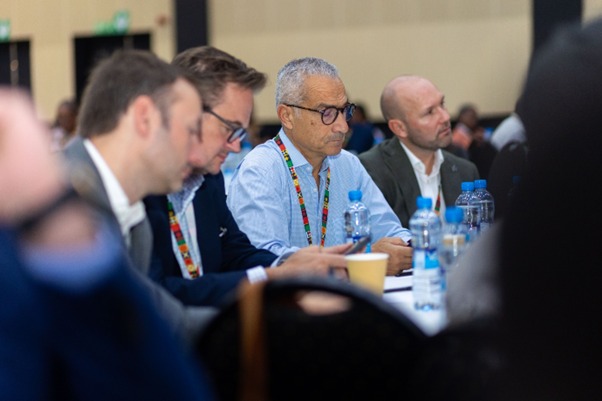
"We are the least performing in terms of growth. We are the least performing in terms of profitability, and we are the least performing in terms of actually the most important aspect, which is the price of our tickets." Mr. Aaron Munetsi, CEO of the Airlines Association of Southern Africa, delivered this assessment at the Airlines Association of Southern Africa conference in Lusaka, sparing no one in his critique. African airlines collectively will earn just $120 million this year compared to the global industry's $36 billion—capturing less than one-third of 1% of worldwide profits despite serving a continent of 1.4 billion people.
Middle Eastern carriers generate $16 in profit per passenger. African airlines that manage profitability at all scrapes together less than a dollar. "Matter of fact, IATA tells us that actually it costs more to buy a cup of coffee than to fly a passenger on the African continent," Munetsi observed. Airlines operate with margins so thin that a single fuel price spike or currency fluctuation can trigger collapse, leaving no room for fleet renewal, technology investment, or service improvements.
"Our policies are poor, and the administrators of those policies are also administrating them poorly." Behind these numbers sits a tangle of self-inflicted wounds. Munetsi delivered this uncomfortable truth directly to the delegates in attendance. Regulatory structures dating to 1964 govern an industry transformed beyond recognition, while license applications vanish into bureaucratic black holes for months. Foreign Operating Permits cost $8,000 in some countries and $800 in neighbours for identical paperwork.
The Protectionist Trap
"Our own airlines are the very first ones to go to their governments,” Mr Munetsi said. “They will come and harass you to say do not give other airlines access into the markets. Protectionism is what they call it." Airlines themselves share blame for the sector's dysfunction. Executives gather at regional forums, endorse open skies declarations, and sign communiqués demanding liberalisation. Then they return home and behave exactly opposite to their public commitments, as Munetsi revealed.
Seven of sixteen SADC countries have refused to sign the Single African Air Transport Market agreement, primarily to shield state-owned carriers from competition. Protected airlines charge high fares, operate unreliable schedules, and drain government budgets through subsidies that could build hospitals and schools. Passengers suffer poor service whilst taxpayers fund the inefficiency.
Compare this to Seychelles, which embraced aviation liberalisation and watched tourist arrivals surge 43% as new carriers entered, fares dropped, and service quality improved. Multiplier effects proved what economists have argued for decades: Protected airlines impose costs on entire economies that dwarf any employment or prestige benefits they provide.
Taxes compound the damage. A 45-minute flight between Accra and Lagos carries nearly $630 in government fees and charges—departure taxes, security fees, navigation charges, fuel levies, and assorted add-ons that often exceed the base fare. Air travel becomes affordable only for the elite and foreign business travellers while ordinary Africans cannot visit neighbouring countries or access opportunities beyond their immediate geography.
Infrastructure Failures and Absurd Outcomes
"Our air traffic navigation system is really dropping the ball. Access to one of our major tourist destinations in South Africa—Kruger National Park and Malanga—is inaccessible because the instrument flight procedures are not functional." Service delivery failures reveal how far the dysfunction extends, as Munetsi stated. Airlines have spent 100 million rand on costs from diversions and cancellations caused by these failures, yet the government service provider faces no accountability, collects fees regardless of performance, and offers neither refunds nor recourse.
Visa policies complete the barrier system choking regional connectivity. Only six African countries allow fellow Africans to arrive without visas: Rwanda, Benin, Gambia, Ghana, Seychelles, and Cabo Verde. Conference attendees traveling to Zambia needed letters from the Director General of Civil Aviation to obtain entry permits, as if ordinary business travellers required special verification from senior government officials.
Munetsi called for immediate, incremental action rather than waiting for perfect conditions. Small consistent steps—harmonising pilot certifications between two countries, reducing specific regulatory fees, implementing electronic visa systems for certain traveller categories—create momentum and demonstrate commitment without requiring comprehensive overhauls or massive funding.
African aviation serves a continent with 1.4 billion people, where the majority are under age 35 and represent a potential workforce, consumer base, and innovation source if given access to opportunities. Airlines must stop reflexive protectionism, governments must treat aviation as development infrastructure rather than a revenue source, and regulators must modernise structures designed for propeller aircraft in the independence era. Coffee vendors will continue out learning airlines until these changes occur, and 350 million people will remain trapped in a connectivity crisis that costs more than any protected carrier could possibly be worth.