Mozel Chimuka, Ciela Resort and Spa, 17 October 2025 — The conference organizer in Lusaka tallies the registration numbers for the regional mining summit and watches his projections collapse. Attendees from Lubumbashi confirmed, Ndola confirmed, but executives from Windhoek and Gaborone declined because reaching Lusaka requires connections through Johannesburg that transform a two-hour geography problem into an eight-hour scheduling nightmare. He closes the spreadsheet knowing the summit will proceed with half its intended delegates, that partnerships will not form, that contracts will not close, that Zambia will remain peripheral to conversations happening about Zambian resources. Then his phone buzzes with a notification—Proflight announces Windhoek service now operational and Maun routes launching 2026, direct connections that collapse those eight-hour ordeals into afternoon flights. He reopens the spreadsheet and drafts follow-up invitations to the executives who declined, attaching the new flight schedules, watching his summit transform from a regional footnote into the gathering it was meant to be because one airline finally drew the lines geography demanded decades ago.
From Association Membership to Regional Expansion
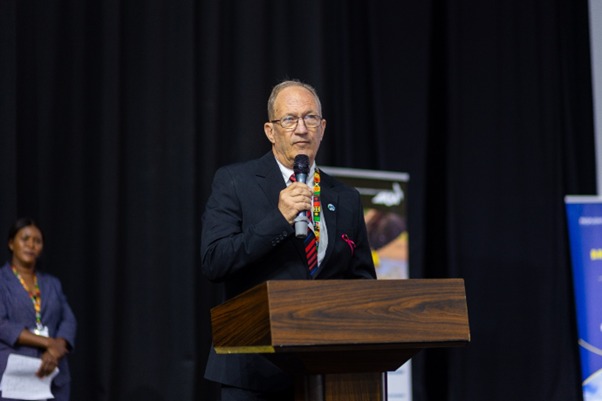
"The last time this event took place on Zambian soil it was actually in Livingstone in 2018, and the host airline was SAA," Anthony Irwin, CEO of Proflight Zambia, recalled during recent remarks that outlined significant expansion plans across the southern African region. That gathering, when the African Airlines Association (AASA) last convened in Zambia with South African Airways as host, left a strong impression on Proflight's leadership, prompting the airline to pursue membership based on what Irwin described as the association's ability to foster meaningful industry collaboration and create practical momentum for African aviation.
The years since have transformed Zambia's aviation sector in ways that validate that decision. "Since that time, we now have in Zambia we've got two scheduled airlines operating to eight domestic destinations," Irwin said. "And currently five regional destinations." Zambia now hosts two scheduled carriers serving eight domestic points alongside five regional destinations. This network represents more than just route expansion—it signals a maturing market where Zambian airlines are beginning to establish themselves as credible players in regional connectivity, competing directly with carriers that have dominated southern African skies for decades.
Building Corridors That Actually Make Sense
"Proflight has formally announced and open sales for our service to Livingstone and onto Windhoek in Namibia," Irwin announced, creating a direct link between two important regional markets that previously required routing through South African hubs. The airline has formalised plans that will reshape how travellers move between key tourism centres in southern Africa, opening bookings for service linking Livingstone with Windhoek and eliminating the eight-hour punishment routes that have plagued the region for generations.
The expansion accelerated following regulatory breakthroughs in Botswana. "We are very pleased to have gained our Botswana foreign operators’ certificate, and I'd like to thank the Botswana authority for the professional way and collaborative way we've all managed to get to this point," Irwin said, clearing the way for operations beginning in 2026. The foreign operator's certificate followed negotiations with aviation authorities protective of incumbent carriers, yet Proflight completed the process and set a launch date with sufficient confidence to begin marketing the service now.
"It will most likely be Lusaka Livingstone Maun and that would connect the Zambian and Botswana Safari industries," Irwin explained. Maun serves as the gateway to Botswana's tourism industry and the Okavango Delta, while Livingstone anchors Zambia's safari sector with Victoria Falls as its centrepiece. Connecting these two safari powerhouses creates opportunities for tour operators to package experiences across both countries, allowing visitors to move seamlessly between Zambian and Botswanan attractions without the mandatory detour through Johannesburg that has plagued itineraries for generations.
Operating three times weekly, the Botswana service will launch with schedules and sales details expected before year-end. Irwin emphasized that part of Proflight's mission involves correcting a persistent geographic misconception that costs Zambia billions in lost tourism revenue. "So many people all over the world believe that the Victoria Falls are in Zimbabwe and then a lot believe it's even in South Africa. So, we really trying to get Livingstone our tourist capital back on the map," he stated. Strengthening air links to Livingstone helps establish the Zambian side of the falls as an accessible, distinct destination worthy of inclusion in southern African itineraries.
Geography as Competitive Advantage
"Lusaka is the logical hub. We're right in the middle of the whole subcontinent," Irwin asserted, making a compelling case for the capital's potential as a regional aviation centre. Geography supports this vision—Lusaka occupies a position near the centre of southern Africa, placed within reasonable flying distance of major cities from Luanda to Johannesburg, and from Dar es Salaam to Windhoek.
What distinguishes this aspiration from mere rhetoric is the alignment Irwin described among key stakeholders. The Zambian government, domestic airlines, the airport company, and the Civil Aviation Authority have all committed resources and policy support toward developing Lusaka into a genuine connecting point for regional traffic. Recent infrastructure investments demonstrate this commitment in concrete terms. Kenneth Kaunda International Airport in Lusaka has received substantial upgrades, while new facilities in the Copperbelt and Livingstone provide the physical foundation needed to handle growing passenger volumes and expanded operations.
Proflight's expansion into Botswana and Namibia fits within this broader ambition. Each new route adds another connection through Lusaka, gradually building the traffic patterns and network density that characterize successful hubs. Irwin's comments suggest Proflight sees itself as a participant in a coordinated national effort to position Zambia at the centre of southern African aviation, beyond simply pursuing growth opportunities.
Rewriting the Safari Circuit
The practical impact of Proflight's route development extends beyond aviation statistics into the economics of southern African tourism. Safari operators have structured their businesses around routing constraints that forced multi-day itineraries through Johannesburg or Harare, adding costs and travel time that many tourists simply refused to accept. The result was lost bookings, cancelled trips, and a tourism industry constrained not by lack of attractions but by lack of flights.
Proflight's direct connections between Livingstone, Maun, and Windhoek eliminate these constraints. Tour operators can now build packages that move clients between Zambia's Victoria Falls, Botswana's Okavango Delta, and Namibia's Etosha National Park without the mandatory South African layover. Travel time drops from nine hours to two. Costs fall proportionally. The economics shift in favour of multi-country safaris that were previously too expensive or time-consuming to justify.
What separates Proflight's plans from the aspirational pronouncements that plague African aviation is execution. The airline has not merely announced intentions—it has secured foreign operator certificates, opened bookings, published schedules, and commenced operations on routes that competitors dismissed as unprofitable or too difficult to navigate bureaucratically. The Botswana certificate alone required negotiations that many carriers would have abandoned, yet Proflight persisted through the regulatory maze and emerged with approval in hand.
The conference organizer in Lusaka who once cancelled his summit for lack of attendees now plans next year's event with different assumptions. Executives from Windhoek will attend because the flight takes two hours, not eight. Delegates from Maun will participate because Proflight makes the journey viable. Partnerships will form, contracts will close, and Zambia will occupy the centre of conversations about Zambian resources because one airline finally made geography work for the country instead of against it. The punishment routes are dead. The direct flights are here.